




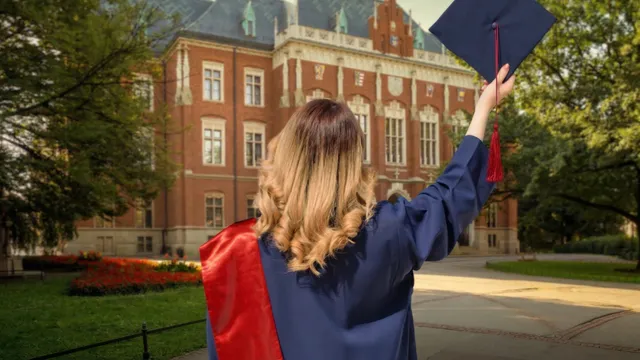
What if your Polish heritage is worth more than family stories? What if it's eligibility for thousands of dollars in scholarships, or a fully funded Master's degree at a Polish university?
Across North America, dozens of institutions, heritage societies, and community organizations award scholarships specifically for students of Polish descent. The Kosciuszko Foundation in New York funds students with grants up to $12,000. The Adam Mickiewicz Foundation in Toronto distributes over 50 bursaries every year. The picture is thinner in the UK and Australia, where Polish communities directed their organizing into other channels. But for students with Polish ancestry, the Polish government itself offers something the diaspora institutions cannot: fully funded degrees through NAWA, open globally to anyone who can document their roots.
The information is scattered across organizational websites, outdated listing sites, and community newsletters. This guide pulls it together: country by country, with Polish government programmes worth knowing about, and practical advice on eligibility and applications.
TL;DR: Polish-heritage scholarships are concentrated heavily in the US (the largest community, ~70+ programs) and Canada (smaller but well-organized, ~30+ programs). The UK and Australia have very few dedicated programmes. For students based there, the Polish government's NAWA programmes are usually the strongest pathway. NAWA's Gen. Anders (for diaspora students) and Poland My First Choice (for any citizen of 44 countries, no heritage required) are arguably the most generous options globally. Most domestic scholarships require documented Polish descent (typically a parent or grandparent); NAWA Gen. Anders requires a Karta Polaka, which takes additional consular processing.
Where Polish heritage scholarships exist — country by country
The availability of Polish heritage scholarships varies enormously depending on where you live. Here's an honest overview, including the places where the options are strong and the places where they're not.
United States
If you're based in the US, you have the most options of anywhere. The Polish-American community is the largest Polish diaspora in the world. The scholarship landscape reflects that scale: around 70+ programmes including national foundations, state-level awards, fraternal benefit societies, and university endowments. Awards range from local $500 grants up to $12,000 from the Kosciuszko Foundation. There are programmes designed for undergraduates, graduate students, high school seniors, medical students, engineering majors, journalists, and a number of more specialised categories, including pilot training and voice performance, which surprise people. Some require membership in Polish-American organisations; many don't.
The US scholarship infrastructure runs deep. Community foundations, university endowments, and fraternal benefit societies all run their own programmes, often with smaller applicant pools than the headline names suggest. We've cataloged every one we found in our full USA scholarship guide, with amounts, eligibility, deadlines, and direct application links.
Canada
The Canadian scholarship system is smaller than the US but better organized than most students expect. Ontario and Alberta carry most of the weight, with national foundations, provincial government-funded awards, and a notable cluster of Polish studies endowments at the University of Toronto.
Individual awards typically range from $500 to $3,000 CAD, modest on their own. But they stack reasonably well, and the application materials overlap enough that submitting to several takes only a few extra hours of work.
Canada's scholarship organizations are unusually varied: long-established heritage foundations, provincial scholarship funds, and scouting associations. Some awards have broad eligibility; others are remarkably niche. We cover all of them in our full Canada scholarship guide.
United Kingdom
The UK has one of the largest Polish communities in Europe, but dedicated heritage scholarships are honestly thin. Almost nothing exists specifically for UK citizens or residents of Polish descent. UK-based Polish community organisations (POSK, the Polish Educational Society, the Federation of Poles, and others) have channelled their institutional energy into Saturday schools and cultural preservation rather than individual student scholarships. That's a real choice worth understanding rather than a gap to lament — the community decided early that language and identity preservation came first.
The one programme we found for UK-based students of Polish heritage is the Jerzy Peterkiewicz Foundation Literary Bursary. Up to £2,000 for young Poles or people of Polish descent aged 18–25, for projects in Polish-English language studies, literary history, translation, or creative writing. Niche, but if your work genuinely sits at the intersection of Polish and English literary culture, it's worth knowing about. Details at jpef.co.uk/bursaries.
Several well-known programmes — the Dulwich College Polish Fund, the Polish Scholarship Scheme, and UWC Poland — fund students from Poland to attend UK boarding schools. These aren't available to UK citizens of Polish descent.
For UK-based students with Polish roots, the most substantial funding pathway runs through the NAWA programmes covered below. Two are particularly relevant: Gen. Anders for diaspora students and Poland My First Choice for any British citizen. Both are open to UK applicants and offer more generous funding terms than most domestic UK options.
Australia
At the time of writing, we found no dedicated Polish heritage scholarship at the university level in Australia. We checked Group of Eight scholarship databases, accessible charity filings, and every Polish community organisation we could find online. The result was zero — not "a few," not "limited."
Australia's Polish community supports Saturday schools, cultural events, and heritage preservation, but dedicated student scholarships didn't become part of that infrastructure. That said, there are a few domestic options to consider, and the NAWA programmes covered below are fully open to Australians.
The PCCA Perpetual Fund supports Polish education and cultural projects through PCCA member organisations, but it grants to organisations rather than directly to individual students. If your Polish Saturday school, club, or scouting group is willing to sponsor an education-related application on your behalf, it's worth exploring. The 2026 round closed in April. Contact: polishcouncil.org.au.
The ANU Ethel Tory Language Grant offers up to AUD $3,000 for ANU undergraduates studying a European language at intermediate or advanced level, and Polish qualifies. It funds travel for credit-bearing overseas language study, so you could use it to study Polish at a university in Poland. The program awards roughly 25–30 grants per year across all eligible languages. Deadline: approximately October. study.anu.edu.au
The NSW Minister's Awards for Excellence and Consul General of Poland Awards recognise outstanding students at Polish Saturday schools — prestigious certificates rather than cash, but credentials that strengthen future scholarship and university applications.
For Australian students of Polish heritage, the most significant funding opportunity comes from the Polish government rather than domestic sources. The NAWA programmes below are open to Australians and offer substantially more than what's available domestically.
NAWA — your Polish heritage can fund a degree in Poland
NAWA (the Polish National Agency for Academic Exchange) runs scholarship programmes that are arguably more generous than most community awards in the US or Canada. They're open to students in all four countries covered above. And they're underused, probably because they involve actually moving to Poland.
If you're open to that possibility, the numbers deserve a careful look.
NAWA Gen. Anders Programme
NAWA's main diaspora scholarship. According to NAWA's own figures, over 4,700 young people of Polish descent worldwide have studied in Poland through this programme to date.
What you get: A monthly stipend of PLN 1,250–1,700 (roughly $310–$425 USD), plus complete tuition exemption at any public Polish university. Not for a semester — for your entire degree. Bachelor's or Master's.
Who it's for: Non-Polish citizens who hold a Pole's Card (Karta Polaka), or dual citizens (Polish + another nationality) who completed their secondary education outside Poland. In both cases, documented proof of Polish roots is required.
The language question: Studies are conducted in Polish. Before that discourages you, NAWA includes a free preparatory language course. You don't need to be fluent to start. Many diaspora students begin with whatever Polish they picked up at home and build from there. It's a real adjustment, but the programme has been running long enough that the path is well-established.
The Pole's Card question: This is where planning matters. A Pole's Card (Karta Polaka) is a formal document issued by Polish consulates that certifies your Polish origin. Getting one requires ancestry documentation (a grandparent's birth certificate, immigration records, baptismal records) plus an interview about Polish culture. The process typically takes 3–6 months. If you're reading this and a deadline is soon, you may need to wait for the next cycle. But if you start the Karta process now, you'll be ready when the next round opens.
2026/27 deadlines: Bachelor's: 9 July 2026. Master's: 21 May 2026.
Apply at: nawa.gov.pl — Gen. Anders Programme
NAWA Poland My First Choice
Here's where it gets interesting for everyone, not just people with Polish roots.
No Polish heritage requirement. Open to citizens of 44 countries including the US, UK, Canada, and Australia. Any Bachelor's degree holder can apply.
PLN 2,000 per month (~$500 USD). Full tuition exemption. Travel allowance. For a complete Master's degree at a top-rated Polish university. English-taught programmes are available.
Deadline: typically April–June.
Apply at: nawa.gov.pl — Poland My First Choice
"How Polish do I need to be?"
Most scholarships require documented Polish descent, typically one parent or grandparent of Polish origin. That's a lower bar than many applicants assume.
"Polish descent" means ancestry, not citizenship. You don't need a Polish passport. A grandmother born in Nowy Targ in 1935 who emigrated to Chicago in 1957 and became an American citizen absolutely counts. Common documentation includes a Polish birth certificate, baptismal records from a Polish parish, immigration papers, or naturalization records. Some programs even accept a family letter explaining your heritage.
NAWA's Gen. Anders programme requires a Pole's Card (Karta Polaka). This is a formal document (separate from citizenship) issued by Polish consulates to people who can prove Polish origin and demonstrate basic knowledge of Polish culture. The application involves an interview and several months of consular processing. If this programme interests you, contacting your nearest Polish consulate sooner rather than later is the right move.
If you're not sure whether your family history qualifies — especially if your documents are incomplete — that's exactly the kind of question we're happy to help with. It's often more straightforward than people fear.
Making the most of your applications
A few practical observations about preparing applications to programmes like these.
Start gathering documents early — earlier than you think
Proof of Polish ancestry can mean requesting records from civil registry offices in Poland (Urząd Stanu Cywilnego), which can take 8–12 weeks to respond. A Pole's Card requires 3–6 months of consular processing. Recommendation letters need a month's lead time if you want them to be thoughtful rather than rushed. The students who begin assembling materials in September for February deadlines are the ones who submit complete, polished applications.
Apply to more programmes than you think you should
Once you've assembled one strong application package, each additional application is incremental work. Most programmes ask for the same core materials: transcripts, an essay about your heritage, proof of ancestry, and a couple of recommendation letters. After the first one, each takes maybe 45 minutes of tailoring. A student who applies to three programmes and wins one at $1,500 did well. A student who applies to eight using the same package and wins three totaling $4,500 did better — with a few extra hours of effort.
Keep looking after March
The biggest deadlines cluster between January and April, but many programmes accept applications through the summer and into autumn. There is funding available throughout the year. Don't assume the window has closed because the headline names have closed.
Don't overlook the smaller awards
A $500 community grant won't cover tuition by itself, but smaller programmes often receive far fewer applications. Applying broadly and stacking several modest awards can add up to more than winning a single competitive national scholarship.
Put real care into your essay
Nearly every programme asks what your Polish heritage means to you. The essays that stand out are specific: they talk about learning to make pierogi with babcia on Saturday mornings, the photograph on the mantelpiece of a great-uncle who stayed in Silesia, the afternoon you realized the language your grandmother spoke on the phone wasn't "the secret language" but Polish. Connect your heritage to your academic goals. A genuine, personal essay stays with the committee when they're making decisions.
Your Polish heritage is worth more than you might realize
Scholarships are a practical place to start. They're not the only thing your Polish heritage may carry.
When you start documenting your ancestry for a scholarship application, sometimes you discover something more than financial aid. A lot of people who reach out to us for ancestry help end up confirming Polish citizenship. Polish citizenship works on the principle of jus sanguinis — citizenship by descent — without a generational limit. If your great-grandfather left Poland in 1905 and the chain of citizenship was never formally renounced, you may be Polish three, four, even five generations later. The status would be unconfirmed but legally real, pending administrative confirmation.
A Polish passport is also an EU passport. That opens doors to EU residency, work rights across 27 member states (plus Norway, Iceland, Liechtenstein, and Switzerland), and European university tuition rates that are often a fraction of US, UK, or Australian costs. At some public universities in Germany, Czechia, and several other EU countries, tuition is effectively zero.
The documents you gather to apply for a heritage scholarship (birth certificates, baptismal records, family history) are often the same documents needed to start a Polish citizenship confirmation case.
If you'd like to find out whether your family history might support a citizenship case, we offer a free assessment. There is no obligation. We are happy to help point you in the right direction.
Your Polish roots may be worth more than you think
Scholarships are one practical application of documented Polish ancestry. Polish citizenship — which passes by descent with no generational limit — may be another. If you'd like to understand what your family history actually shows, our free heritage assessment is a short, no-obligation diagnostic.
Take the free assessmentSummary
Polish heritage scholarships are concentrated in two countries and complemented by Polish government programmes open globally:
- United States — the largest scholarship infrastructure, with national, state, and fraternal awards ranging from $500 to $12,000. Full USA guide →
- Canada — national foundations, provincial government awards, and university endowments, typically $500–$3,000 CAD. Full Canada guide →
- United Kingdom — almost no dedicated heritage scholarships at the university level. The Jerzy Peterkiewicz Foundation Literary Bursary (up to £2,000) is the one programme identified for UK-based students of Polish heritage. NAWA programmes are the substantive pathway for funding.
- Australia — no dedicated Polish heritage scholarships at the university level identified. NAWA programmes are the primary pathway.
- NAWA (Polish government) — Gen. Anders funds full degrees for students of Polish origin; Poland My First Choice offers funded Master's degrees to citizens of 44 countries with no heritage requirement.
Most programmes require documented Polish descent, typically at least one grandparent of Polish origin. Start gathering your documents early, apply broadly, and don't stop looking after March. The country guides linked above have every programme we found, with amounts, eligibility, and deadlines.
Key takeaways:
- The US has the strongest landscape — 70+ scholarships from $500 to $12,000, across national foundations, state awards, and fraternal societies
- Canada is well-organized despite being smaller — 30+ programmes, concentrated in Ontario and Alberta, with the Adam Mickiewicz Foundation awarding 50+ bursaries annually
- The UK and Australia have thin domestic landscapes; NAWA government programmes are the primary pathway for students there
- NAWA Gen. Anders funds full Bachelor's and Master's degrees in Poland for diaspora students; Poland My First Choice is open to any citizen of 44 countries, no heritage required
- Most domestic scholarships require one parent or grandparent of Polish origin — not a Polish passport, not fluency in Polish
- Application materials overlap heavily across programmes — one well-prepared package, submitted to several, multiplies your chances with minimal extra effort
- The documentation work for scholarship applications overlaps with Polish citizenship confirmation — both often require the same birth certificates and parish records
Frequently asked questions
Only one of my grandparents was Polish. Do I qualify?
In almost every case, yes — and you shouldn't feel uncertain about it. Most programs require "Polish descent" without specifying how many generations or what percentage. One Polish grandparent is generally enough for the Kosciuszko Foundation, PRCUA, ACPC, and most regional awards. You'll need some documentation (a birth certificate, immigration record, or even a family letter), but the requirements tend to be more flexible than people expect.
NAWA's Gen. Anders programme is the main exception: it requires a Pole's Card (Karta Polaka), which involves a formal process through Polish consulates.
Do I need to speak Polish?
For most of the scholarships in this guide, no. The main exception is NAWA Gen. Anders, which funds study in Poland conducted in Polish. But even that programme includes a free preparatory language course, so you don't need to be fluent to begin. A handful of smaller awards give preference to Polish speakers, but fluency is rarely a hard requirement outside of study-in-Poland programmes. Heritage tends to matter more than language skills.
Can I apply for scholarships in a country where I don't live?
Generally, no. US scholarships require US citizenship or residency, Canadian ones require Canadian status, and UK and Australian programs follow the same pattern. The exception is NAWA, whose programmes are open internationally regardless of where you live. That's part of what makes them so valuable for students in countries with fewer domestic options, particularly Australia.
Are there scholarships for graduate students?
More than most people realize. The Kosciuszko Foundation awards up to $12,000 at the graduate level. The ACPC Pulaski Scholarship ($5,000) is exclusively for grad students. PNA, PRCUA, Gorecki, and multiple Canadian programs all accept graduate applicants. At the doctoral level, the Thesaurus Poloniae fellowship and NAWA Polonista programme are designed specifically for researchers. If you're a grad student, you have more options than you probably think.
How do I prove my heritage if I don't have documents?
Start with whatever you do have — it's often more than enough. Family photographs, old letters, parish records, immigration manifests (searchable for free at FamilySearch.org), naturalization certificates. Some programs accept a written letter from a family member explaining your ancestry. For more formal processes like the Pole's Card, you'll need at least one official document connecting you to a Polish ancestor.
If you're stuck or not sure where to begin, reach out to us — helping people piece together their Polish ancestry is what we do, and we're happy to help you figure out your next step.
