




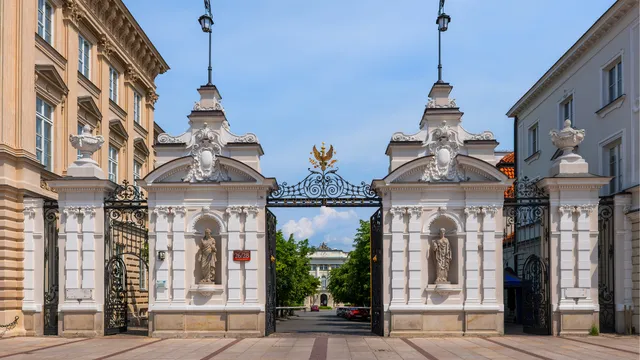
Here's something worth knowing. Poland has quietly become one of the best-value places to study in Europe. Its top schools keep climbing the world rankings. More than 850 courses are taught fully in English. And both fees and daily costs sit well below the US, UK, or Western Europe.
If you have Polish roots, here's where it gets interesting. A Polish passport makes you a local student, not a foreign one. Study in Polish at a public school, and your fees can fall to zero.
This guide walks through the real picture. What it costs. Which fields are strongest. Why so many students come for medicine. And how you'd study in Polish even if you don't speak it yet. A student weighing your own options, or a parent planning a few years out? Either way, the same facts apply.
TL;DR: Poland has 850+ English-taught courses and is one of Europe's cheapest study spots. Medicine is the headline draw, at roughly €10,000–18,000 a year. But study in Polish at a public school, and Polish citizens, EU/EEA citizens, and Karta Polaka holders pay nothing. So a Polish passport by descent can take fees to zero. English courses are paid either way. But the passport still drops the student visa and adds the right to study and work across the EU.
Why study in Poland?
Three things drive Poland's rise: cost, the range of English courses, and the quality at the top.
Start with cost. Both fees and daily life run low next to Western Europe. Lower fees and cheaper living than the West. Stretched over a six-year medical degree, that adds up fast. On language, you don't need Polish to start. Poland offers more than 850 English-taught courses. And on quality, the system is strong in tech and medical fields. Several schools hold solid world spots.
Which Polish universities rank highest?
Two names lead the pack. The University of Warsaw is the country's largest. It tops Poland's Perspektywy 2025 ranking, and sits around 271 in the world on QS 2026. It's also Poland's strongest name in computer science, law, and the humanities.
Jagiellonian University in Kraków is the oldest, founded back in 1364. It ranks second at home. Think of it as the country's research engine, strong in medicine and science.
Warsaw University of Technology takes third. It's Poland's top tech school, and a hub for English-taught engineering.
The tier just below is strong too. Adam Mickiewicz University in Poznań is a leading pick for the humanities. AGH University in Kraków is a force in engineering and tech. And here's the bigger picture: Polish schools have been climbing the world tables for years, across QS, THE, and ARWU alike.
| University | QS 2026 | THE 2026 | ARWU 2025 | Polish rank (Perspektywy 2025) |
|---|---|---|---|---|
| University of Warsaw | 271 | 601 | 401 | 1 |
| Jagiellonian University (Kraków) | 303 | 501 | 501 | 2 |
| Warsaw University of Technology | 487 | 1201 | 901 | 3 |
| Adam Mickiewicz University (Poznań) | 741 | 1001 | 901 | 6 |
| AGH University (Kraków) | 801 | 1001 | 801 | 4 |
Ranking key: QS and THE (Times Higher Education) are global rankings. QS leans on reputation, THE on research and teaching. ARWU is the Shanghai ranking, scored on research output. Perspektywy is Poland's own national ranking. Figures from study.eu and Perspektywy 2025.
Which fields of study is Poland known for?
Poland's name rests on two areas most of all: its technical fields and medicine. Medicine is the biggest draw, and we cover it just below. The technical side, plus a few other strong fields, looks like this:
- Engineering and tech. Warsaw University of Technology is the country's top technical school. It ranks =231 in the world for engineering and tech in QS, with a wide English catalogue. AGH University in Kraków is rated Poland's top engineering school by Scimago and EngiRank 2025.
- Computer science. The University of Warsaw leads here, at =188 in the world in QS. Warsaw Tech and AGH are strong too, in data science and applied computing.
- Business. Kozminski University in Warsaw ranks the #1 business school in Central and Eastern Europe by the Financial Times, with the "triple crown" of AACSB, EQUIS, and AMBA. SGH Warsaw School of Economics tops the national table.
- Law and humanities. Warsaw and Jagiellonian lead for law. Adam Mickiewicz University in Poznań joins them as a top pick for the humanities.
Want range in English? The University of Warsaw alone runs 42 English-language courses, from American Studies to International Relations.
Medicine: Poland's biggest draw
If one course explains why students fly in from all over, it's medicine. Poland's English-taught medical courses are built to meet European teaching standards. And some have run for decades. Jagiellonian's School of Medicine in English opened back in 1994.
Here are the leading med schools, by world standing in clinical medicine:
| Medical school | World rank (clinical medicine) | English-taught study |
|---|---|---|
| Jagiellonian University (Kraków) | #215 | School of Medicine in English (since 1994) |
| Wrocław Medical University | #250 | English Division: Medicine, Dentistry, Nursing |
| Medical University of Warsaw | #448 | English-taught MD in the capital |
| Medical University of Gdańsk | #500 | English-taught medical study |
| Medical University of Silesia | #559 | English-taught medical study |
| Medical University of Łódź | #562 | English-taught medical study |
World spots per U.S. News Best Global Universities for clinical medicine in Poland. Course detail from each school's English-division pages.
Now the money. An English-taught MD in Poland runs about €10,000–18,000 a year. That's a fraction of what the same degree costs in the US or UK, over six years.
But here's the honest part. For medicine, that fee is usually the same with or without a Polish passport. English fees don't tend to split EU from non-EU students. So what does the passport change for a future doctor? Everything around the degree. Six years with no student visa to renew. The right to work while you study. And the right to work as a doctor anywhere in the EU once you're done. Want to head home to practise instead? That means home-country exams and licensing steps, so map that path first.
There's one way to make the degree itself free, though: study medicine in Polish. Full-time study in Polish at a public school costs nothing for Polish citizens, medicine included. Speak Polish and hold the passport? You can train as a doctor for just living costs. The catch? Polish-taught medicine is among the hardest courses to get into, and you need the language first. For non-speakers, the Zerówka prep year (below) is the usual way in.
What does it cost, and who studies for free?
Cost in Poland splits two ways: the language you study in, and your passport.
Study in Polish at a public school, and fees can be zero. Full-time study in Polish is free for Polish citizens, EU/EEA citizens, Karta Polaka holders, refugees, and anyone with a C1 state certificate in Polish. That's the biggest money win in the whole system. And it's just the group that a Polish passport by descent puts you in. For good.
Study in English, and you pay, but not a lot. English courses cost everyone a few thousand euros a year (medicine more, as above). The fee is usually the same for EU and non-EU students. A non-EU student who studies in Polish without a break still pays only about €2,000 a year, well under the English rate.
So where's the deepest saving? In the combo: study in Polish, plus the free-study break that the passport (or a C1 pass) gives you. For a Polish-speaking citizen at a public school, the degree itself can cost nothing. That leaves just living costs, and those are low by Western standards too.
Paying for an English-taught course? Scholarships can take the edge off. Poland's NAWA agency runs funding schemes for foreign students, and some are aimed at people of Polish descent. We lay out the options in our guide to Polish heritage scholarships.
Don't speak Polish yet? The foundation-year route
"Study in Polish for free" sounds out of reach for a lot of families abroad. But there's a well-worn bridge: a one-year prep course called Zerówka, the foundation year.
These courses are intense. They run about nine months, October to June, with 500–750 class hours. The goal is to get you to roughly B2, plus the words you'll need for your field: medical, legal, tech, and so on. Fees run about €2,000–4,500. You finish with a pass that Polish schools accept, so you skip the language entrance exam. Signing up also gets you a one-year visa.
A few school language centres are well known for this:
- Jagiellonian University runs prep tracks for social sciences, law, and medicine.
- University of Warsaw's Polonicum is the oldest centre for teaching Polish as a foreign language in the country.
- UMCS in Lublin runs a 750-hour year for about €2,600, special subjects included.
- University of Łódź is the only centre that preps foreign students for medical study taught in Polish.
There's a free on-ramp, too. The state agency NAWA runs free summer courses. You cover only travel and insurance. And here's the part that ties it together. A C1 pass unlocks free study in Polish at public schools for any foreigner, passport or not. With Polish roots, the passport gets you the same break without the exam. Without it, the Zerówka-plus-pass route still gets you there.
What does the passport change for a student?
Free fees are one piece. The bigger shift: a Polish passport makes you an EU citizen. That changes a lot past the price tag.
- No student visa. Ever. EU citizens can live, study, and work across the EU with no visa, no proof-of-funds form, no renewals.
- The right to work while you study, with none of the hour caps that hit foreign students.
- Healthcare, including the European Health Insurance Card for cover as you move between EU states.
- The right to stay after you graduate, anywhere in the EU. A foreign grad's right to stay rides on post-study visa schemes that shift with politics. An EU citizen just stays, works, or moves on. The degree leads somewhere. It doesn't end at a visa deadline.
That last point is the one that changes the math. You're not just cutting the cost of a degree. You're removing the end date on what comes after it.
And study is just one slice of it. The same passport reshapes work, travel, healthcare, and where you can live for good. We lay out the full set in 13 benefits of confirming Polish citizenship.
Poland is the doorway, not the limit
One more thing worth holding onto. A Polish passport doesn't only open Poland. As an EU citizen, you get the same fee terms as locals across the whole EU. That means free public schools in Germany and the Nordics, and low fees in France and the Netherlands. Poland is often the natural first stop, medicine especially. But the same passport is a key to the whole bloc.
Key takeaways
- Poland has 850+ English-taught courses and ranks among Europe's cheapest study spots.
- Medicine is the flagship draw: roughly €10,000–18,000 a year, well below US/UK, at schools like Jagiellonian, Wrocław, and Warsaw.
- Study in Polish at a public school and Polish citizens, EU/EEA citizens, and Karta Polaka holders pay nothing, so the passport can take fees to zero.
- Don't speak Polish? The Zerówka foundation year and a C1 pass open the same free-study door.
- Past fees, the passport drops the student visa and adds the right to study, work, and stay across the whole EU, not just Poland.
- The process takes time, so start before the application clock forces it.
Find out if free study is on the table
Before you pick a course, or pay a foreign-student rate, it's worth finding out where your family stands. If you'd like to know whether your roots could support a citizenship case, we offer a free assessment. It tells you whether you (or your child) likely qualify by descent, what documents you'd need, and how the timing fits your study plans. There's no obligation. We're glad to point you in the right direction.
Get a free assessmentSay your line qualifies. The next question is timing, and the short answer is: start sooner than feels needed. Getting a Polish passport by descent is a paperwork job, and it takes many months. That's before you even find old family records, get apostilles, and order sworn translations. The paper hunt is often the longest part.
Now work backwards from the application calendar. A student's fee and visa status gets set when they apply. So the passport needs to exist by then, not by graduation. A student a year or two out? A parent with a teen around 14–16? The good time to start is now. And if the clock gets tight, the work still pays off. EU status matters just as much for a later master's, a first job in Europe, or your kids down the line.
This is general info, not legal or admissions advice. Passport and degree-recognition questions turn on your own situation.
Frequently asked questions
Do I need to speak Polish to study in Poland?
No. Poland has over 850 English-taught courses across medicine, engineering, business, and more. Polish matters for one thing: free study at public schools applies to courses taught in Polish. But the Zerówka foundation year and a C1 pass make that route reachable even if you start with zero Polish.
Is studying in Poland free if I have a Polish passport?
For courses taught in Polish at public schools, yes. Polish citizens, EU/EEA citizens, and Karta Polaka holders pay no fees. English-taught courses, medicine included, are paid for everyone, whatever the passport.
How much does English-taught medicine in Poland cost?
Usually €10,000–18,000 a year, depending on the school and course. Still well under what you'd pay in the US or UK.
What is the Zerówka foundation year?
A one-year prep course: about nine months and 500–750 hours of hard Polish, plus the words for your field. It gets you to roughly B2 and skips the language entrance exam. Cost is usually about €2,000–4,500.
Will a Polish medical degree count back home?
Polish English-taught medical courses are built to European standards. But medicine is a guarded field. To work as a doctor in the US, Canada, UK, or Australia, you go through separate licensing exams and steps in each one. Heading home to practise? Check that path before you pick a course.
---
Fees, ranks, and steps change. Check the current details with each school's admissions office and your nearest Polish consulate before you decide.
