




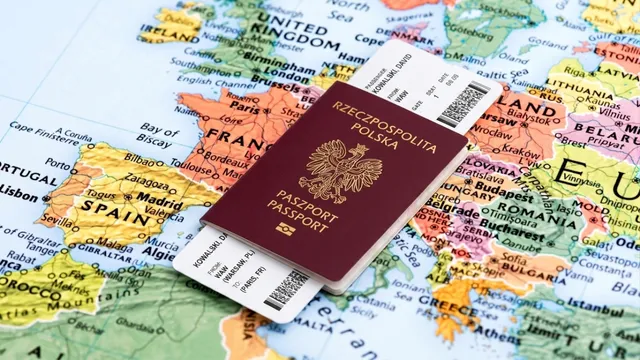
Confirming Polish citizenship does more than link you to your family's past. It gives you a wide range of rights and opportunities. It makes you a citizen of the European Union. That means the right to live in 27 countries, one of the world's strongest passports, and social security.
There's also a benefit that outlasts you: Polish citizenship can pass to your children. It comes from Polish law, which hands citizenship down by blood. Confirm yours, and you may secure the same rights for the next generation.
You don't have to move to Poland to claim any of it. Citizenship by descent is a legal right. It comes from your ancestry, not from where you live. So if a parent or grandparent was Polish, the right may already be yours.
This article runs through 13 real benefits of Polish citizenship. What each one is, and what it actually changes day to day. Some are big. Some are small but handy.
TL;DR: A Polish passport makes you an EU citizen. You get the right to live and work in 27 EU countries, one of the world's strongest passports, and the option to keep your current passport too. You can pass Polish citizenship on to your kids. And you never have to live in Poland to hold it.
1. European Union Membership
This is the big one. A Polish passport makes you a European Union (EU) citizen. That single status is the foundation under most of this list. It unlocks the right to live, work, study, and retire across the EU. It opens up public healthcare, social security, and EU-wide consumer and worker protections.
The most everyday version of that status is freedom of movement. You can cross EU and Schengen borders the way you'd move between cities at home. No visa to apply for. No work permit to wait on. No employer sponsorship to chase down. You move when it suits you. Try a job in Berlin for a year. Spend a summer working in Lisbon. Settle your retirement in Spain. The paperwork is the same as it is for a local, because in legal terms you are one.
2. Global Travel Mobility With a Strong Polish Passport
The Polish passport is one of the strongest in the world. On the Henley Passport Index 2026 update, it ranks 6th. That gives visa-free or visa-on-arrival access to 183 places. So what does a number like that change? Mostly friction. Less paperwork, fewer visa fees, and far fewer "apply in advance" headaches when you travel.
That ease shows up whether you're traveling for fun, for work, or to see family. For most trips, you just book and go. No visa form weeks ahead. No waiting on an embassy reply. No real worry about being turned back at the border.
And here's the part that makes it easy to say yes. Poland allows dual citizenship. You don't have to give up your current passport to become Polish. You keep both, as long as your home country allows it too. The US, Canada, the UK, and Australia all do. So in practice, you're adding EU rights on top of what you already have. You're not trading one for the other.
3. Access to Education on Local-Fee Terms
For families, this is one of the benefits that pays off most. If you want the best for your kids, citizenship opens real doors. As a Polish citizen, your child can study at a public university in Poland, where full-time degrees often carry no tuition fees at all. And it doesn't stop at the border. Your kids can study at top universities across the EU, with no extra paperwork for foreign students. They pay the same fees as local students do, not the much higher international rate.
There's funding on the table, too. As an EU citizen, your child can join Erasmus+. That's the EU exchange program that funds study and training in other European countries. On top of that, there's a whole world of scholarships set aside for students of Polish heritage. Many of them are open to applicants in the US, Canada, and beyond. We pulled them together in our guide to Polish heritage scholarships, with amounts, eligibility, and deadlines. If your child might study in Europe, this is one of the benefits that can quietly save the most.
4. The Full EU Job Market
The "right to work in the EU" is bigger than it sounds. A Polish passport opens the whole EU job market to you. You can apply for jobs in any member state with no work permit and no special visa. Employers don't have to sponsor you or prove they couldn't find a local first. In legal terms, you are the local.
That opens up a wide range of opportunities. You get access to one of the world's largest labor markets. Worker protections are strong, and working conditions are solid across much of the bloc. The right roles depend on your field and where you look. But the door is open in all 27 EU countries. And it doesn't stop there. The same work rights extend to Norway, Iceland, Liechtenstein, and Switzerland. We go deeper into the EU job market in our guide to working in Europe with a Polish passport, covering opportunities, labor laws, and working conditions.
5. Freedom to Do Business in Europe
A Polish passport gives you full access to the EU single market. That's more than 440 million people. You can set up and run a business in any EU country on the same terms as local founders.
What does that buy you in practice? You sell across borders with fewer trade barriers, and you can apply for EU funding and grants. For founders and freelancers, this is a big deal. One of the world's largest markets is open to you. And you compete on the same footing as any local business.
6. Public Healthcare Access
Polish citizens can use Poland's public healthcare. Live in Poland and pay into the system, and you're covered, and so is your family. Our guide to the Polish healthcare system covers how it works and what to expect.
Most EU countries run public systems along similar lines. As an EU citizen, you can use those too. You just follow each country's rules once you live and pay in there. It's not a magic free pass everywhere. But it's a real safety net if you ever relocate.
7. Health Cover While Traveling in the EU
The European Health Insurance Card (EHIC) covers Polish citizens on short stays in other EU countries. Get sick or hurt on a trip within the EU, and you get the care you need. You get it on the same terms as a local resident.
Worth being clear on the limits: it's free to apply for, but it won't replace travel insurance for everything. Think of it as a useful layer, not a full policy. Still, it takes a lot of worry out of trips around Europe.
8. Simpler European Retirement Options
This is one of those benefits you only value later. But the difference shows up in two ways.
First, your work record follows you. EU rules let you carry your social security history between member states. Work in more than one EU country over your life, and the years count together when you claim a pension. No more lost contributions from a stint in Berlin or a few years in Dublin.
Second, you have far more flexibility on where to actually spend retirement. Settle in Portugal for the climate. Pick Spain for the cost of living. Stay in Poland if family is there. As an EU citizen, you can do any of that without visas or residence permits. And public healthcare in your country of residence comes with the territory.
9. Political Participation and Civic Voice
Citizenship is more than a passport and a set of rights. It's also a seat at the table. As a Polish citizen, you can vote in Polish national and local elections. You can also vote in the referendums that shape the country's direction. You can stand as a candidate, too, if you're so inclined.
And it doesn't end at Poland's borders. As an EU citizen, you can vote in European Parliament elections. That gives you a voice in the laws that shape life across the bloc. That covers worker protections, climate policy, and digital privacy. You can also vote in local elections wherever you settle in the EU. And you can sign the European Citizens' Initiative to put issues on the EU agenda.
That last part is the quiet payoff. The right to shape your country's future is something many people around the world fight for. The same goes for the EU's future. For you, it comes with the same status that gives you the passport. It's the civic side of belonging, and it's yours from the day your citizenship is confirmed.
10. Legal Protection at Home and Abroad
As a Polish and EU citizen, you're backed by a strong set of legal rights. EU law protects you against discrimination and guarantees equal treatment. That covers work, housing, and daily life, with safeguards across gender, race, ethnicity, religion, and more. The system is built to treat you fairly. And it gives you a way to push back when it doesn't.
These rights aren't just words on paper. National courts apply them, and the Court of Justice of the EU has the final say on what EU law means. The protection follows you abroad, too. Travel somewhere Poland has no embassy, and you can turn to any other EU country's embassy for help. Think a lost passport, an accident, or a crisis where you need to leave fast. You hope to never need it. But it's a solid backstop to have.
11. Property Ownership Across the EU
As an EU citizen, you can buy property in Poland and across the EU. You skip the special permits that non-EU buyers often run into. That covers homes and, in most cases, land.
So buying a home becomes a normal purchase, not a red-tape project. Ever thought about a place in Europe to live in, rent out, or retire to? Citizenship clears one of the bigger barriers in your way. We cover the details in our guide to buying property in Poland.
12. A Birthright You Can Pass to Your Children
Citizenship by descent is a legal right, not a favor someone grants you. Once it's confirmed, it's permanent. No fee to keep it. No expiry date. You don't have to live in Poland, visit a certain number of times, or renew anything. It just stays yours.
It also passes to your kids. Polish citizenship moves down the family by blood. So confirming yours can lock in the same rights for the next generation. And those rights are the same ones you'd have. EU residence and work, EU-priced education, a top-ranked passport, the lot. Your kids get citizenship from birth, so they never have to go through the descent process you did. Their kids inherit the same way.
That's where the multi-generational angle gets interesting. Confirming Polish citizenship today is also a decision on behalf of grandchildren and great-grandchildren who haven't been born yet. They'll grow up holding an EU passport because you took the step. They'll have options at 18 that most of their peers won't.
A small but honest note on timing. Polish citizenship law is generous, and citizenship has passed by blood for over a century. But how it transmits has been shaped by the rules in force at the time of each birth, and some past chains were broken by old provisions that have since been changed. Confirming now is what makes the chain solid going forward. The longer the confirmation sits on a future to-do list, the more it depends on the law continuing to read the way it does today. That's not a scare tactic, just the practical case for not putting it off.
13. Pride and Sense of Belonging
Not every benefit fits on a spreadsheet. Confirming Polish citizenship and holding a Polish passport carry something deeper. They give you a real sense of pride, identity, and belonging. They connect you to a thousand years of history, a culture that endured partitions, occupations, and exile, and a nation known for its resilience, its faith, and its contributions to art, science, music, and freedom movements around the world.
It's a quiet kind of pride. You belong to a community that has held onto its language, its faith, and its way of doing things across generations and across continents. It's there in the kitchen at Wigilia on Christmas Eve, with the empty chair for a stranger and the oplatek wafer passed from hand to hand. Those evenings carry their own customs and superstitions, quietly kept alive far from Poland. It's there at the cemetery on All Saints' Day, when families light candles for the people who came before them. It's in a grandmother's pierogi, and in finally hearing your own surname pronounced the way it was always meant to sound.
This is what heritage actually feels like up close. Not a museum, not a costume, but a living thread you can pick up and carry. For people raised at a distance from Poland, confirming citizenship can be the moment that thread tightens. The papers come through. The passport arrives. And something you knew about yourself becomes something the world recognizes too.
That feeling matters. It grounds you in something larger than yourself. It honors the people whose choices and sacrifices made your life possible. And it gives the next generation a heritage worth carrying forward, not as nostalgia, but as a real and chosen identity.
The practical benefits in this list are real and easy to count. This one is harder to measure. But for many people, it is the one that matters most.
Who benefits most?
Most of these benefits are strongest if your work or your family can move. Say you'll never leave your home country, and your kids won't study abroad. Then the day-to-day payoff is smaller. The passport still opens doors when you want them open. And the pride and sense of belonging stand on their own, regardless of where you live.
There's a second angle worth naming, too. A strong EU passport is a backup plan. If things shift at home, whether in politics, the economy, or travel rules, you always have somewhere you can live and work. You may never need it that way. But the option is its own kind of security, and this one rests on a right you may already hold.
Key takeaways
- A Polish passport makes you an EU citizen, with the right to live and work in 27 countries plus Norway, Iceland, Liechtenstein, and Switzerland.
- It ranks 6th in the world on the Henley Passport Index 2026, with visa-free or visa-on-arrival access to 183 places.
- Poland allows dual citizenship, so in most cases you keep your current passport.
- Citizenship by descent comes from your ancestry. You never have to live in Poland to hold it.
- The benefits are strongest for mobile workers and families, but the passport and the backup option stand for anyone.
Find out if you qualify
Most of these benefits start with one step: confirming that you're already a Polish citizen by descent. Was a parent, grandparent, or great-grandparent Polish? Then there's a real chance the right is already yours and just needs confirming.
If you want to see whether your case qualifies, book a free assessment, with no commitment on either side. You can also read how the process works first.
Book a free assessmentThis guide is general information, not legal or tax advice. Whether you qualify, and how these rules apply to you, depends on your own situation.
Frequently asked questions
Do I have to live in Poland to get these benefits?
No. Polish citizenship by descent comes from your ancestry, not from where you live. Once it's confirmed, you hold it from anywhere in the world. You can use your Polish passport, pass citizenship to your kids, and move to the EU if and when you choose. There's no requirement to live in Poland at any point.
Do I have to give up my current citizenship?
No. Poland allows dual citizenship. So you can become Polish without dropping your current one, as long as your home country allows it too. The US, Canada, the UK, and Australia all permit dual citizenship. For most people from these countries, keeping both passports is simple.
How strong is the Polish passport, really?
Very strong. On the Henley Passport Index 2026, it ranks 6th in the world, with visa-free or visa-on-arrival access to 183 places. As an EU citizen, you can also live and work across the EU.
What does freedom of movement in the EU actually mean?
It means you can live, work, study, and retire in any of the 27 EU countries. The same goes for Norway, Iceland, Liechtenstein, and Switzerland. You don't need a visa. You don't need a work permit. It also smooths out everyday travel. You move easily between countries, and you skip the long lines that non-EU citizens wait in at borders.
What educational benefits come with Polish citizenship?
Quite a few. Your child can study at a Polish public university, where full-time degrees often carry no tuition fees. Across the rest of the EU, they pay the same fees as local students. They skip the higher foreign rate. They can also join the Erasmus+ exchange program. And students of Polish heritage can apply for a range of dedicated scholarships.
What healthcare benefits do Polish citizens get?
Two main ones. Live in Poland and pay into the system, and you and your family are covered by public healthcare. When you travel in the EU, the European Health Insurance Card (EHIC) covers care you need during short stays, on the same terms as a local. It won't replace travel insurance for everything. But it's a solid safety net.
Can my children get Polish citizenship too?
Yes. Polish citizenship passes from parent to child by descent. If yours is confirmed, your children can usually claim it as well. Whether it reaches a given child or grandchild depends on the dates and details in your family history, so it's worth checking the specifics for your own case.
